

Research Overview
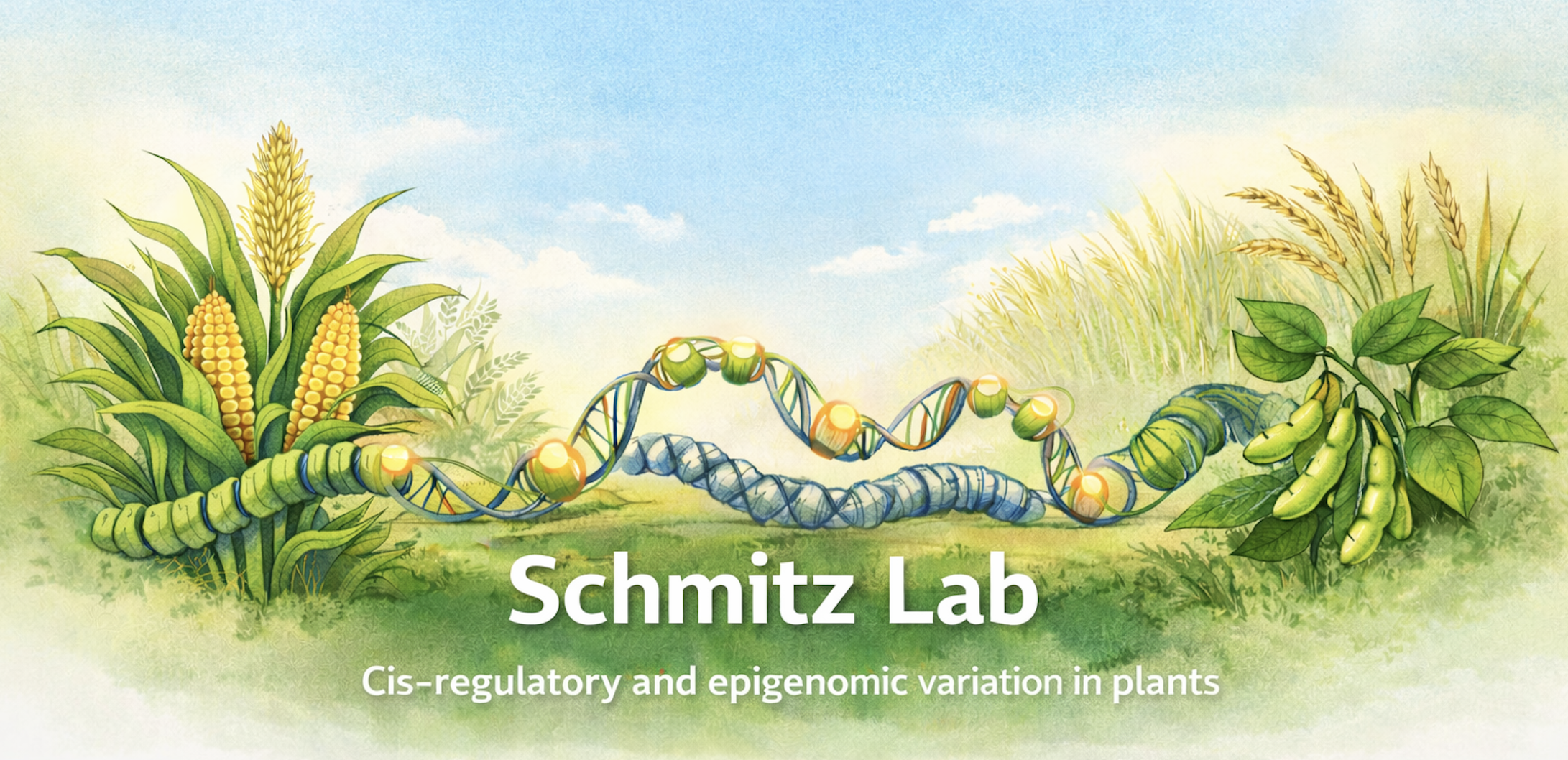
We study how phenotypic variation is driven by natural and spontaneous genetic and epigenetic variation in plants, with a major focus on cis-regulatory elements and chromatin biology.
Spontaneous epialleles
We investigate the molecular basis and function of spontaneous epialleles. Systematically identifying epialleles
using epigenomic approaches, understanding their heritability, and defining how they interact with genetic
variation are essential for a comprehensive understanding of genome evolution and its effects on phenotypic variation.
Evolutionary epigenetic clock
We are developing a plant evolutionary epigenetic clock to explore how plants respond and migrate in their native
environments as climates change.
Cis-regulatory variation
We aim to identify cis-regulatory sequences underlying phenotypic variation. We use a combination of molecular genetics,
epigenomics, and single-cell genomics to identify and functionally test candidate cis-regulatory regions important for crop
improvement and natural phenotypic diversity.
Focus plants: maize and soybean; also rice, switchgrass, wheat, Arabidopsis and Eutrema among many others.